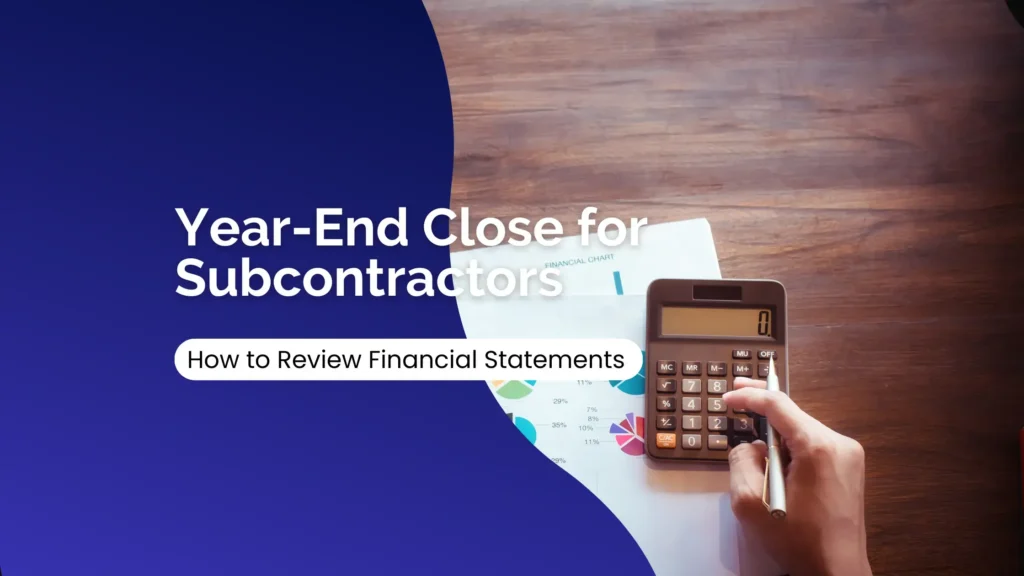
A year-end close is the process of finalizing your financial records at the end of your accounting year. It involves reviewing all income, expenses, assets, and liabilities to ensure your books are accurate and complete.
For subcontractors, finishing a year-end close is important. It helps you keep taxes on track, avoid penalties, and keep your financial records correct. It also gives a clear picture of your business finances, making it easier to plan for the year ahead and make good decisions.
Prepare and Review Your Financial Records
The first step in your year-end is to gather and organise all financial records. This includes invoices, receipts, bank statements, contracts, and expense records. Having everything in one place helps you clearly see your income and costs throughout the year and makes the review process much smoother.
Once organized, it’s time to review your income and expenses carefully. Reconcile all payments received to make sure every client payment or project invoice is recorded correctly. Then, check all business expenses from materials and subcontractor fees to travel and office costs to make sure nothing is missing or duplicated.
Taking the time to organize and review your records ensures that your financial statements accurately reflect your business’s performance. It also helps you identify any errors early, stay on top of taxes, and make informed decisions for the year ahead.
Confirm Your Assets and Liabilities to Maintain Correct Accounts
At this stage of your year end close, it’s important to carefully review all your business assets. Assets include things your business owns, such as tools, equipment, vehicles, and any other valuable resources.
In addition, review any asset disposals or write offs that occurred during the year. This includes assets that were sold, scrapped, or are no longer in use. Recording these ensures your financial statements accurately reflect the current value of your business assets and provide a true picture of your company’s financial position.
After reviewing your assets, look at your liabilities. Liabilities are what your business owes, such as loans, unpaid invoices, credit lines, or other outstanding payments. Make sure all of these are recorded correctly so that you know exactly what your business owes.
Carefully reviewing both your assets and liabilities gives you a complete picture of your finances. This helps keep your balance sheet accurate, provides a clear view of your business’s health, and makes it easier to make smart decisions for the future.
Accountancy Services for Construction Companies
→ Enjoy 60 Days Free Trial
→ No Strings Attached, No Catch!
Book an AppointmentLearn MoreHow to Handle Taxes During Your Year End Close
During your year-end close, it’s important to review all the taxes your business needs to pay, such as income tax, VAT, and any other obligations. Make sure all payments for the year are recorded correctly and that deadlines are met to avoid fines or penalties.
At this stage, you should also carefully review your business expenses. Not all costs are fully claimable; some are disallowable, such as depreciation, for which you can instead claim capital allowances. This keeps your tax figures accurate and in line with HMRC requirements.
Planning your expenses properly can also reduce your taxable income and save money. Keep clear records of all invoices, receipts, and bills, as these support your tax claims if needed.
How to Prepare Accurate Financial Statements for Your Business
Once your income, expenses, assets, and liabilities are reviewed, it’s time to prepare your financial statements. Start with the Profit & Loss Statement (Income Statement), which shows your business’s revenue, costs, and overall profit or loss for the year. Next, create the Balance Sheet, detailing your assets, liabilities, and equity to give a clear snapshot of your financial position. Finally, prepare the Cash Flow Statement to track how cash moved in and out of your business. Together, these statements provide a complete view of your finances and help you make informed decisions for the future.
For sole traders, the Balance Sheet and Cash Flow Statement can be prepared for internal review, but HMRC does not require them to be submitted. However, if a subcontractor is operating as a limited company, the Balance Sheet is required by HMRC, and the Cash Flow Statement is mandatory for medium and large companies.
Review, Finalize, and Organize Records
After preparing your financial statements, check them carefully for any mistakes or missing transactions. Making sure everything is correct is important for taxes and understanding how your business is doing. If you are unsure about anything, ask an accountant for help.
Once your records are correct, organize and store them properly. Keep digital backups and set up a simple system for filing your documents. This will make next year’s year end faster and easier.
Get Ahead of Next Year’s Closing
Completing year-end close helps subcontractors keep their finances accurate and tax-ready. Review your income, expenses, assets, and liabilities to ensure everything is recorded correctly. For CIS subcontractors, remember that income is often received after CIS deductions. Adjust your records by grossing up sales, calculating any CIS refunds, and recording them in the balance sheet. Also, plan the timing of your CIS claim for smoother cash flow.Staying organised ensures compliance and makes next year’s close quicker and easier.
SwiftAcc provides reliable CIS accounting and year-end guidance to help you work smarter and lower costs. Reach out today for your free consultation.